9 Days
9-Day Safari: The Ultimate Mara River Crossing Experience
Designed for one purpose: the best possible chance of witnessing the dramatic Mara River crossings, the climax of the Great Migration. Four full days in the Northern Serengeti give you the buffer this unpredictable spectacle demands.
Tour Highlights
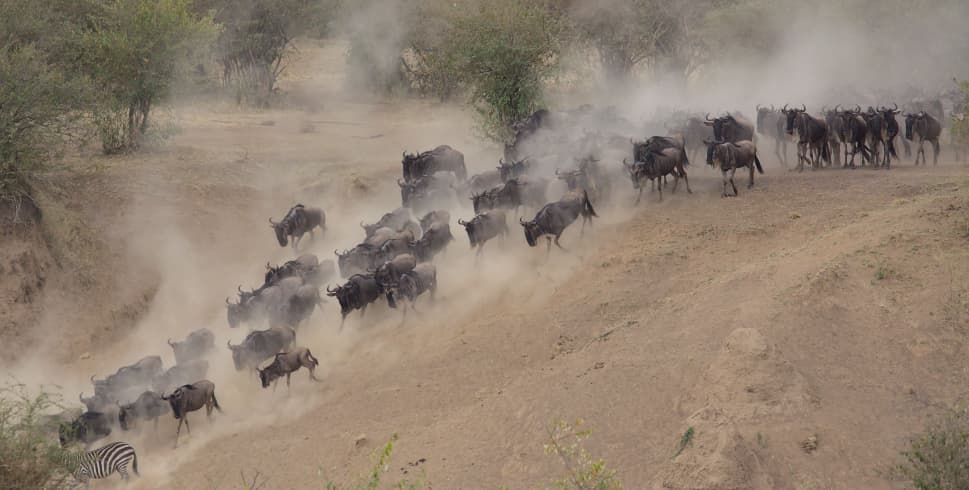
The Mara River Crossing
Thousands of wildebeest and zebras plunge into crocodile-infested waters.
Predator Action at the Crossing
Lions, cheetahs, leopards, and hyenas stalk the vulnerable herds — prides here can number up to 30.
Tarangire’s "Land of Giants"
A peaceful prelude among legendary elephant herds and ancient baobabs.
The Ngorongoro Crater
Home to approximately 30,000 animals, including the endangered black rhino.
Day by Day
Arrival in Arusha
Transfer to your hotel, a safari briefing with your guide, and an evening at leisure to prepare for the journey ahead.
Arusha to Tarangire National Park
A full-day game drive with a picnic lunch — elephants, lions, leopards, buffalo, oryx, giraffe, and zebra near the Tarangire River, plus over 500 bird species.
Tarangire to Lake Manyara
Game drive through Lake Manyara’s diverse ecosystems — tree-climbing lions, hippos, elephants, zebras, buffalo, and over 350 recorded bird species.
Ngorongoro Crater – Africa’s Eden
Descend 600 meters onto the crater floor — approximately 30,000 animals in a 260km² area. Search for the black rhino in Lerai Forest, and watch flamingos gather at Lake Magadi. Picnic lunch at the Ngoito Hippo Pool.
Central to Northern Serengeti
Journey to the Kogatende area, the heart of the river crossing action, as the landscape transforms from open plains to rolling hills and riverine vegetation.
Northern Serengeti – Full Day at the Mara River
The day you’ve been waiting for — positioning at known crossing points along the Mara River, watching the tense build-up as herds gather, and witnessing the dramatic plunge, crocodile ambushes, and triumphant survivors scrambling up the far bank.
Northern Serengeti – Second Full Day of Crossings
With four days in the north, your chances of witnessing multiple crossings increase significantly. Sunrise game drives find predators at their most active, with sundowner drinks at golden hour.
Northern to Central Serengeti
A final morning game drive in the north before heading south, stopping at the Seronera Visitor Centre to learn about Serengeti conservation.
Central Serengeti to Arusha
A sunrise game drive for final wildlife encounters, an optional stop at the crater rim, and the transfer to Arusha and on to Kilimanjaro International Airport.
What's Included
- Private 4×4 safari vehicle with pop-up roof, charging ports, and cooler
- Professional English-speaking safari guide for the entire journey
- All park entry and conservation fees (Tarangire, Lake Manyara, Serengeti, Ngorongoro)
- Ngorongoro Crater service fee
- All game drives as per itinerary
- All meals as specified
- Drinking water (1.5 litres per person per day) during game drives
- Airport/hotel pickup and drop-off in Arusha
What's Not Included
- International flights to/from Kilimanjaro (JRO)
- Tanzania visa fee ($50 e-visa for most nationalities)
- Travel and medical insurance (required)
- Tips and gratuities
- Alcoholic and soft drinks
- Personal expenses and souvenirs
- Optional activities (hot air balloon safari ~$500+ per person)
Best Time for River Crossings
Peak season is July–October, with August and September the absolute peak for the largest, most dramatic crossings. Crossings are unpredictable — herds may hesitate for days before committing.
What to Pack
Light, breathable neutral clothing; warm layers for cool mornings; a rain jacket; sun protection; comfortable shoes; a camera with a 200mm+ zoom lens; binoculars; a power bank.